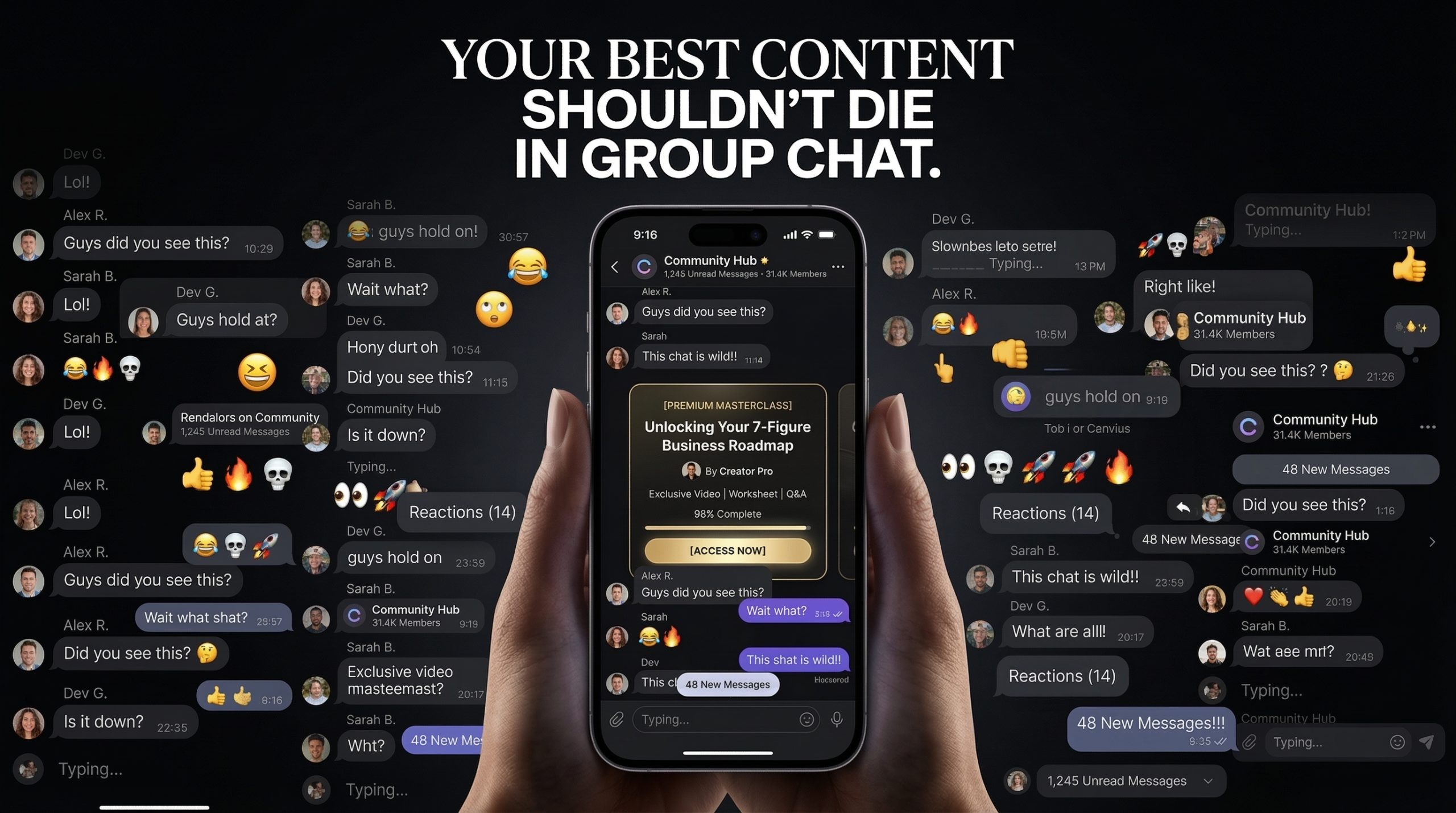
Many coaches, consultants, and service providers amass large social media followings, only to find their audience engagement doesn’t translate into significant high-ticket client bookings. The gap between a substantial follower count and consistent high-ticket revenue is a growing challenge for experts in the 2025-2026 market. Traditional lead magnets and webinars, once effective, are now less potent for converting prospects into clients for $5K+ services.
A challenge funnel offers a distinct approach, prioritizing commitment-based qualification over passive content consumption. This method has proven effective in converting engaged followers into high-paying clients. For instance, one parenting coach leveraged this strategy to transform her business from generating $2K months to consistently securing $7.5K client bookings.
Why Your Audience Engagement Isn’t Converting
The primary reason engaged audiences often fail to convert into paying clients is the “lurker economy,” where followers consume content without ever committing to a purchase. In the age of AI, audiences expect free, instant answers to complex questions, diminishing the perceived value of paid information alone. This creates a significant trust gap in high-ticket sales, making one-call closes for services over $5K increasingly difficult.
Data indicates that typical conversion rates from social media followers to discovery calls range from a mere 0.1% to 0.3%, highlighting the inefficiency of broad engagement strategies. This low conversion rate underscores the need for a more structured, commitment-driven approach to client acquisition.
- Followers consume free content without buying, creating a “lurker economy.”
- AI chatbots provide instant answers, devaluing static information.
- Trust is hard to build for high-ticket sales, making one-call closes rare.
- Social media follower-to-discovery call conversion rates are typically 0.1-0.3%.
What Makes Challenge Funnels Work for High-Ticket Services
Challenge funnels are effective for high-ticket services due to the psychology of commitment escalation, which builds buying intent through daily action. Participants self-select through their engagement, naturally filtering serious prospects from casual content consumers. This process allows prospects to experience your methodology firsthand, building transformation evidence before the sale.
The optimal duration for these challenges is typically 5-7 days, striking a balance between requiring sufficient commitment and maintaining high completion rates. This short, intensive format allows participants to achieve quick wins, increasing their investment and readiness for a higher-ticket offer. Challenge-based qualification systems can deliver 3-5x ROI within the first year, accelerating lead processing and boosting conversion rates.

The Parenting Coach Case Study: Breaking Down the Numbers
A parenting coach with 100K Instagram followers was generating an average of $2K per month, selling $7.5K 6-month coaching packages. She implemented a 5-Day ‘$49 Peaceful Bedtime Reset’ paid challenge using CommuniPass. The challenge content was delivered natively to participants’ preferred platforms like WhatsApp, Telegram, Discord, or email.
This strategy resulted in 847 challenge signups, with an impressive 677 completers, achieving an 80% completion rate. CommuniPass challenges consistently hit 70-80% completion rates, significantly higher than the 3-5% typical for online courses. From these completers, 23 discovery calls were booked, leading to 8 new clients and $60K in sales. The high 80% completion rate was crucial, achieved because participants received content directly in the app they already use daily, eliminating the friction of portal logins or forgotten passwords.
The 5-Day Challenge Framework: Day-by-Day Structure
The 5-day challenge framework is designed to build momentum and deliver tangible value, progressively leading participants towards a high-ticket offer. This structure leverages short, actionable content delivered natively to the participant’s chosen platform, maximizing engagement and completion.
- Day 1: Quick Win – Deliver an immediate, tangible result that builds confidence. This includes a 2-minute selfie video and one simple micro-task, delivered securely via CommuniPass to the participant’s chosen platform (WhatsApp, Telegram, Discord, or email).
- Days 2-3: Methodology Introduction – Teach your unique framework in digestible 2-minute video pieces. Each segment is accompanied by daily micro-tasks, delivered natively to platforms like WhatsApp, Telegram, Discord, or email.
- Day 4: Obstacle Addressing – Tackle the most common objection or challenge your audience faces. This involves a short teaching segment supported by community interaction within their preferred app.
- Day 5: Vision Casting + Pitch – Conclude by showing participants what’s possible long-term through a final 2-minute video. Introduce your paid program as the natural next step, leveraging the momentum built over the challenge.
Critical Success Factors: What Made This Challenge Convert
Several factors were critical to the parenting coach’s challenge success, focusing on accountability, visible progress, strategic timing, and qualification. Daily accountability was integrated through private community interaction and coach check-ins, rather than merely email delivery. Homework assignments were designed for visible progress, allowing parents to share immediate “bedtime wins” in real-time, which generated powerful social proof.
The strategic pitch timing was also key, with the high-ticket offer introduced on Day 4, when participant momentum and results were highest, capitalizing on the “Day 4 momentum window.” Crucially, qualification was built directly into the challenge: only participants who completed at least 3 days were invited to book discovery calls, ensuring that calls were reserved for truly engaged and committed prospects.

The Tech Stack: Why CommuniPass Is the Only Tool You Need
CommuniPass streamlines the entire challenge funnel process, providing an all-in-one platform for coaches and consultants. The platform handles landing page creation, payment processing for challenge fees, and omnichannel content delivery. Participants choose their preferred delivery channel at signup, whether it’s WhatsApp, Telegram, Discord, or email, and content is delivered natively to that app.
This approach eliminates login friction, as there are no portals to access or passwords to remember. Participants consume challenges where they already spend their time, addressing a key challenge where 99% of senior leaders view omnichannel as important, but only 43% expand beyond email/SMS. CommuniPass further enhances engagement with automated daily delivery, AI-powered check-ins, completion tracking, and seamless upsell paths to high-ticket offers or recurring memberships.
| Feature | Traditional Course Platforms (Kajabi/Teachable) | CommuniPass Omnichannel Delivery |
|---|---|---|
| Login Friction | High (requires separate login, password, portal access) | Zero (content delivered natively to user’s chosen app) |
| Delivery Method | Centralized course portal or email drip | Decentralized to WhatsApp, Telegram, Discord, or email |
| Average Completion Rate | 3-5% for online courses (passive consumption) | 60-80%+ for active, native delivery challenges |
| Participant Experience | Requires active effort to log in, potential disengagement | Seamless, integrated into daily messaging habits, high engagement |
| Payment Processing | Integrated but often tied to platform’s checkout flow | Integrated and flexible, supports challenge fees and upsells |
| Community Management | Often via separate community tab/forum or Facebook group | Native within chosen messaging app, unified dashboard for coach |
Common Challenge Funnel Mistakes (and How to Avoid Them)
Coaches and consultants often make critical errors that undermine the effectiveness of challenge funnels. A common mistake is providing too much teaching and not enough doing, which diminishes the impact of daily homework completion. The focus should be on actionable steps rather than content volume.
Another frequent misstep is pitching either too early or too late; the “Day 4 momentum window” is crucial for high-ticket offers. Failing to implement a qualification filter, inviting everyone to book calls instead of only engaged participants, also leads to wasted time. Finally, weak community elements result in significantly lower completion rates, with challenges lacking peer interaction seeing 40-50% lower completion rates.

Scaling the Model: From One Challenge to Recurring Revenue with the Downsell Strategy
Once a challenge funnel proves successful, the model can be scaled for recurring revenue. Challenges can be run quarterly or monthly, depending on audience size and offer price point. A crucial element for maximizing revenue is the downsell strategy: not everyone will convert to the $7,500 package, so those who didn’t upgrade are seamlessly offered a $99/month recurring “Paid Group” for ongoing support. This group is managed entirely through CommuniPass on their chosen platform.
This downsell creates an additional revenue stream from qualified, engaged prospects who aren’t ready for the high-ticket offer. Evergreen challenge funnels, typically automated after 3+ live rounds, allow for continuous lead generation. Most coaches see a positive ROI by their second challenge, with subsequent challenges generating 3-5x returns on ad spend.

Your Next Steps to Build a Challenge Funnel
To implement a successful challenge funnel, begin by identifying the best quick-win result you can help someone achieve within 24-48 hours. This immediate value builds trust and commitment. Next, map your unique methodology to a 5-day teaching structure, ensuring each day includes actionable steps and micro-tasks.
Choose your tech stack strategically based on your current audience size and budget; start simple and scale later. CommuniPass offers a comprehensive solution for managing landing pages, payments, and omnichannel content delivery. Finally, set realistic expectations: your first challenge is primarily for learning and refining, while subsequent challenges will focus on maximizing revenue.

Key Takeaways
- Large social media followings often do not translate to high-ticket client revenue due to passive consumption and trust gaps.
- Challenge funnels leverage commitment escalation, filtering serious prospects and building transformation evidence before the sale.
- The parenting coach case study demonstrated an 80% challenge completion rate and $60K in sales from a $49 challenge.
- Native omnichannel content delivery via CommuniPass eliminates login friction, significantly boosting engagement and completion rates.
- Strategic pitch timing on Day 4 and qualification through challenge completion are critical for high-ticket conversions.
- A downsell strategy to a recurring paid group captures revenue from participants not ready for the top-tier offer.
Conclusion
The landscape for coaches and consultants has shifted; audience engagement alone is no longer a reliable indicator of high-ticket sales potential. The challenge funnel, particularly when powered by platforms like CommuniPass, offers a robust and effective solution for converting established audiences into high-paying clients. By focusing on commitment, delivering tangible results, and leveraging seamless omnichannel delivery, experts can bridge the gap between followers and revenue, securing consistent $7.5K+ client bookings. This strategic approach moves beyond vanity metrics to create predictable, scalable income streams in the evolving digital economy.
Frequently Asked Questions
Why is letting participants choose their delivery platform (WhatsApp, Telegram, Discord) better than course portals?
Letting participants choose their delivery platform significantly reduces friction compared to traditional course portals, where low login rates often lead to completion rates under 10%. People check messaging apps like WhatsApp, Telegram, or Discord 50+ times daily, meaning content delivered natively meets learners where they already are, drastically increasing engagement and completion rates to 70-80%.
How do I secure my challenge videos if they are sent via chat apps like WhatsApp or Telegram?
CommuniPass employs secure delivery mechanisms, including watermarking and access control, to protect challenge content distributed via chat apps. While no system is entirely foolproof against piracy, the significant gains in completion and conversion rates from native delivery often outweigh the minimal risks, as participants have already paid for access and their engagement is tracked.
How does automated daily feedback work in a native chat challenge delivered through CommuniPass?
CommuniPass utilizes AI-powered check-in systems that allow participants to submit homework directly within their chosen messaging app. Automated acknowledgment and encouragement messages are sent, and coaches receive notifications for manual review of specific submissions, creating accountability for participants without overwhelming the coach.
What’s the difference between a $49 paid challenge and a free challenge for conversion rates?
Paid challenges, even at a low price point like $49, act as a powerful buyer qualification filter, leading to completion rates of 70-80% compared to 15-25% for free challenges. This payment creates an initial commitment that translates into higher engagement and significantly better discovery call booking rates, as participants are already invested. Explore launch a paid challenge instead.
Can I run a challenge funnel if I don’t have a huge email list or social following?
Yes, challenge funnels are highly effective even with smaller audiences, requiring as few as 1,000 engaged followers or 500 email subscribers. Paid challenges, in particular, work well with smaller audiences due to their higher qualification rates, allowing coaches to achieve profitability with fewer participants and CommuniPass further reduces overhead costs.
How do I transition participants from the challenge to my high-ticket offer without being pushy?
The transition from a challenge to a high-ticket offer should leverage the momentum built by the participant’s quick wins and experienced results, typically on Day 4 of a 5-day challenge. Frame your paid program as the logical next step to continue their transformation, using specific language within the native messaging environment, and CommuniPass facilitates seamless upsell flows.
What happens to challenge participants who don’t buy my $7,500 package?
For challenge participants not ready for the $7,500 package, a downsell strategy involves offering a $99/month recurring paid group for ongoing support. CommuniPass manages this community access on participants’ chosen platforms, creating a valuable recurring revenue stream from engaged prospects who still benefit from your expertise. Explore grow your Skool community and turn followers into buyers.
How long should my daily challenge content be if it’s delivered via WhatsApp or Telegram?
Daily challenge content delivered via messaging apps should be brief, ideally a 2-minute video paired with a micro-task. This brevity respects mobile-first consumption habits and short attention spans, paradoxically increasing completion and implementation rates compared to longer, more passive content.
Can I automate a CommuniPass challenge or does it need to be live every time?
CommuniPass challenges can be fully automated into evergreen funnels, typically after 3+ successful live rounds. While some personalized elements may be reduced in automation, the core content delivery and check-ins can be automated to maintain engagement and conversion rates at scale.
What if participants choose different platforms—how do I manage community across WhatsApp, Telegram, and Discord simultaneously?
CommuniPass provides a unified dashboard that allows coaches to manage community across WhatsApp, Telegram, and Discord simultaneously. Content is delivered consistently across all chosen channels, and community bridging features simplify monitoring and interaction, ensuring engagement despite platform diversity. Explore why challenges work for online success.
Key Terms Glossary
Challenge Funnel: A multi-day, commitment-based marketing strategy designed to convert engaged prospects into high-ticket clients through actionable steps and quick wins.
Lurker Economy: A phenomenon where a significant portion of an audience consumes free content without ever engaging in paid products or services.
Commitment Escalation: A psychological principle where small, successive commitments build a prospect’s investment and readiness for a larger commitment or purchase. Explore challenge ideas for coaches and online creators.
Omnichannel Content Delivery: The seamless distribution of content across multiple platforms (e.g., WhatsApp, Telegram, email) allowing users to choose their preferred consumption channel.
Login Friction: The resistance or difficulty users face when required to log into a separate platform or portal, often leading to reduced engagement and completion rates.
Day 4 Momentum Window: The optimal time in a 5-day challenge, typically Day 4, to present a high-ticket offer when participants have experienced significant results and commitment is highest.
Downsell Strategy: An offer presented to prospects who decline the primary high-ticket offer, providing a lower-cost alternative to retain their engagement and generate recurring revenue.
Native Delivery: Receiving content or interactions directly within an application or platform without needing to navigate to an external website or portal.