The landscape for coaches, consultants, and creators is rapidly evolving in 2026. The era of selling static information products is over, replaced by a demand for interactive, outcome-driven experiences. Experts must adapt their monetization strategies to thrive in this new environment.
This shift necessitates moving beyond traditional courses and eBooks to models that foster deeper engagement and deliver measurable transformation. The future of monetizing expertise lies in structured, interactive experiences that AI cannot replicate.
The Shift from Info Products to Structured Experiences
The digital economy has moved from information scarcity to information abundance, largely driven by AI. Audiences now expect immediate answers to virtually any question, making static PDFs, eBooks, and pre-recorded courses less valuable. This has rendered traditional digital product sales unsustainable for many experts.
In 2026, audiences seek engagement, personalized guidance, and tangible outcomes over mere content consumption. The opportunity for coaches and consultants lies in transforming their expertise into interactive experiences that build relationships and deliver real-world results. These experiences are what AI cannot replace.
Why Info Products Are Dead and Experience Products Are Rising
AI has fundamentally altered what audiences are willing to pay for. Information is now free and ubiquitous; what commands value is application, community, and personalized support. This change has led to a crisis in completion rates for traditional online courses, which often hover around 5-15%, according to research on MOOCs.
In stark contrast, structured, interactive experiences boast completion rates of 70-80%, especially when delivered through engaging platforms like WhatsApp. The market no longer rewards selling information; it rewards selling transformation and access. One-time purchases are being supplanted by ongoing, relationship-based monetization models.
| Monetization Aspect | Traditional Model (Courses/eBooks) | Interactive Model (AI Agents/Communities) | Impact on Revenue |
|---|---|---|---|
| Revenue Type | One-time purchase; transactional | Recurring subscriptions; relationship-based | Higher customer lifetime value (LTV) and predictable monthly recurring revenue (MRR) |
| Customer Engagement Pattern | Passive consumption; low completion rates (5-15%) | Active participation; high completion rates (70-90%) | Increased client satisfaction, testimonials, and referrals |
| Scalability Method | More content creation; higher marketing spend per sale | Automated guidance (AI); leveraged group interaction | Scales without directly trading time for money; reduces expert burnout |
| Pricing Structure | Per-product pricing; flat rate | Tiered subscriptions; value-based pricing | Captures more value, allows for upsells and cross-sells within a tiered system |
| Value Proposition | Information acquisition; knowledge transfer | Transformation, community, accountability, personalized support | Commands higher price points and justifies ongoing investment |
| Competition from AI | Highly susceptible; information easily replicated | Complements human expertise; enhances personalized delivery | AI becomes a tool for leverage, not a replacement for the expert |

The 7 Expert Monetization Models
These seven proven models are designed to generate predictable, recurring revenue in 2026 by focusing on interactive experiences and outcomes. They move beyond the limitations of static content.
1. Paid Challenge: Time-bound, Outcome-Focused Programs
Paid challenges are short, intensive, time-bound programs designed to help participants achieve a specific, tangible outcome. They are highly effective because they leverage urgency, accountability, and group dynamics. These programs often include daily prompts, live check-ins, and peer interaction.
Key Features:
Specific, achievable goal within 5-30 days.
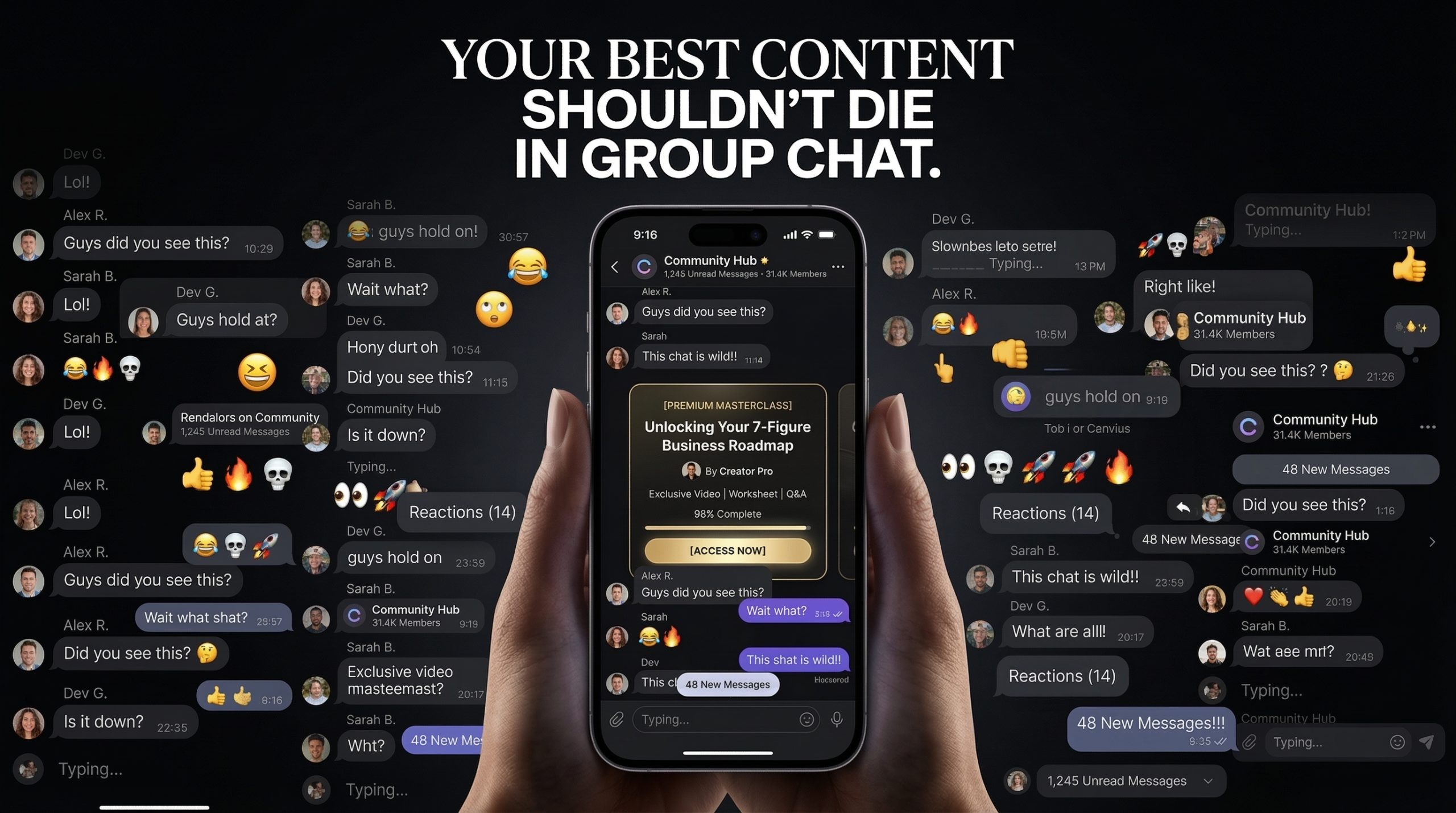
Daily guidance and accountability through a dedicated group chat.
Direct access to the expert for Q&A sessions.
High engagement and completion rates due to structured format.
Pricing: Typically ranges from $49-$99, justifying premium pricing through time-bound urgency and direct interaction. This range ensures accessibility while signaling value.
Verdict: Excellent for lead generation, building authority, and converting new audiences into paying clients.
2. Paid Community Membership: Ongoing Access to Peer Network and Expert Guidance
A paid community provides continuous access to a supportive peer network and expert guidance. Members pay a recurring fee for exclusive content, Q&A sessions, networking opportunities, and personalized support. This model fosters loyalty and creates a predictable revenue stream.
Key Features:
Exclusive content, resources, and live events.
Direct interaction with the expert and fellow members.
Networking and collaboration opportunities.
Sense of belonging and continuous learning.
Pricing: Ranges from $29-$197 monthly, with tiers based on access level and interaction frequency. Founding member strategies, offering discounted lifetime pricing, can build initial momentum.
Verdict: Builds strong relationships and high customer lifetime value, providing a stable recurring revenue base.
3. AI Agent (Exclusive – Paid): Subscription-Based Conversational Guidance
An exclusive AI Agent offers subscription-based conversational guidance available 24/7. This AI is trained on your specific expertise and can answer questions, provide tailored advice, and guide users through processes. It acts as a scalable extension of your knowledge.
Key Features:
Personalized, on-demand guidance and support.
Available anytime, anywhere, on platforms like WhatsApp or Telegram.
Reduces expert’s direct time commitment for routine questions.
Trained on the expert’s unique knowledge base.
Pricing: Subscription models from $19-$97/month, depending on exclusivity, depth of features, and level of personalization.
Verdict: Provides scalable, personalized support and a strong recurring revenue stream, leveraging AI to deliver value without constant human intervention.
4. AI Agent (Public – Lead Capture): Free AI-Powered Tool for Qualification
A public-facing AI Agent serves as a free, AI-powered tool designed to qualify and convert leads. It engages potential clients, answers common questions, and directs them to appropriate paid offerings or resources. This model automates parts of your sales funnel.
Key Features:
Automated lead qualification and nurturing.
Accessible to a broad audience, often embedded on websites or social media.
Gathers valuable data on prospective clients.
Acts as a 24/7 virtual assistant for initial inquiries.
Pricing: Free for the user, monetized through lead conversion to paid products.
Verdict: An effective top-of-funnel strategy to automate lead generation and pre-qualify prospects, reducing manual effort.

5. Group Coaching or Cohort Program: Structured Learning with Live Interaction
Group coaching and cohort programs combine structured learning with live, interactive sessions. These are typically longer than challenges (e.g., 6-12 weeks) and focus on more comprehensive transformation. They offer the benefits of personalized attention within a leveraged group setting.
Key Features:
Weekly live calls, workshops, or training sessions.
Dedicated community for peer support and discussion.
Curriculum delivered over an extended period.
Direct feedback and coaching from the expert.
Pricing: $297-$997 per cohort, with payment plan options, reflecting the deeper engagement and longer duration.
Verdict: Highly impactful for participants and highly profitable for experts, allowing for leveraged delivery of high-value coaching.
6. Sponsorships and Brand Partnerships: Monetizing Audience Access and Influence
Sponsorships and brand partnerships involve monetizing your audience’s access and your influence. Brands pay to reach your engaged audience through various formats, such as sponsored content, product placements, or affiliate promotions. This diversifies revenue beyond direct client services.
Key Features:
Leverages existing audience trust and reach.
Diversifies income streams.
Requires careful selection of aligned brands.
Can include speaking engagements or co-created content.
Pricing: Varies widely based on audience size, engagement, niche, and partnership scope.
Verdict: Excellent for established experts with significant audience reach, turning influence into direct revenue.
7. Affiliate and Referral Revenue: Earning from Recommending Tools and Services
Affiliate and referral revenue is earned by recommending tools, products, or services you genuinely use and trust. When your audience makes a purchase through your unique link, you receive a commission. This is a low-effort way to generate additional income.
Key Features:
Promotes products/services relevant to your audience.
Requires minimal ongoing effort once set up.
Builds credibility by recommending trusted resources.
Passive income stream.
Pricing: Commission-based, varying by program (e.g., 10-50% of sale, flat fee per lead).
Verdict: A sustainable revenue stream that adds value to your audience by curating useful resources.
How to Stack Models Without Burning Out
The 4-product stack framework creates multiple revenue streams without multiplying your workload. This strategy leverages AI and strategic sequencing to deliver value at different price points.
1. Challenge: Start with a paid challenge to introduce new clients to your methodology and build initial trust. This is a low-barrier entry point.
2. Community: Transition challenge participants into a paid community for ongoing support and deeper engagement. This fosters loyalty and recurring revenue.
3. AI Agent: Implement an AI Agent to automate guidance and answer common questions, freeing up your time while maintaining personalized support. CommuniPass allows you to deploy AI Agents directly within messaging apps like WhatsApp.
4. Payment Links: Use flexible payment links, such as those offered by CommuniPass, to sell various standalone products or one-off services as upsells. This caters to different client needs and monetizes without forcing platform switching.
Stacking these models strategically allows you to use AI Agents to automate guidance while maintaining a personal touch. This framework ensures that your monetization grows predictably and sustainably. For coaches looking to build a robust income stream, understanding creator monetization is key.

Pricing Your Expertise
Effective pricing reflects the transformation and value you deliver, not just the information itself. Strategic pricing ensures profitability and attracts the right clients.
Paid Challenges: Price paid challenges between $49-$99. The time-bound urgency and direct accountability justify this premium for a short, impactful program.
Paid Community Membership: Monthly tiers ranging from $29-$197 are effective. Base access to a community can start lower, while premium tiers with more personalized interaction or exclusive content command higher prices. Founding member strategies, offering discounted lifetime access, can build initial momentum and social proof.
AI Agent Pricing: Subscription models for AI Agents can range from $19-$97/month, depending on the level of exclusivity and features provided. Higher tiers might offer more personalized AI responses or access to advanced tools.
* Group Coaching and Cohort Programs: These typically command $297-$997 per cohort. Offering payment plan options can increase accessibility and conversion rates for these higher-ticket programs.
Focus on setting prices that reflect the transformative value and outcomes clients receive, rather than merely the information exchanged. The global coaching market is projected to grow significantly, reaching $10.1 billion by 2032, indicating strong demand for high-value offerings.
Platform Recommendation: Where to Build Your Monetization Stack
Forcing your audience to switch platforms kills engagement and revenue. The most effective strategy is to meet your audience where they already are.
CommuniPass offers significant advantages over traditional platforms like Kajabi, Teachable, or Skool for interactive monetization. While traditional platforms excel at hosting static courses, they fall short in fostering ongoing engagement. CommuniPass integrates seamlessly with popular messaging apps like WhatsApp, Telegram, and Discord, where audiences spend most of their time. WhatsApp alone boasts 3 billion monthly active users, making it a prime location for engagement.
Traditional platforms are better suited for static content delivery, but they struggle with the dynamic, interactive experiences demanded in 2026. Skool, while community-focused, often lacks the AI Agent capabilities and flexible payment options needed for a truly comprehensive monetization strategy. Choosing the right platform means prioritizing audience convenience and interactive features. For a complete comparison, consider exploring the Best Community Platforms for Coaches and Creators in 2026.

Key Takeaways
- The market for static information products is declining due to AI’s ability to provide free information.
- Engagement, guidance, and outcomes are what clients value and pay for in 2026.
- Interactive monetization models like paid challenges and communities yield higher completion and retention rates.
- AI Agents offer scalable, personalized support, extending an expert’s reach without increasing their direct time investment.
- Stacking different monetization models creates multiple revenue streams and reduces expert burnout.
- Pricing should reflect the transformative value delivered, not just the content provided.
- Monetizing on platforms where audiences already reside (e.g., WhatsApp, Telegram) significantly boosts engagement.
Conclusion
The monetization landscape for coaches, consultants, and creators has irrevocably shifted. The outdated model of selling static information products is no longer viable in an AI-driven world where knowledge is freely accessible. Success in 2026 hinges on embracing interactive, outcome-focused experiences that deliver genuine transformation and foster deep client relationships.
By adopting models like paid challenges, active communities, and AI Agents, experts can build predictable, recurring revenue streams while scaling their impact. Platforms like CommuniPass, designed for seamless integration with popular messaging apps, are crucial for delivering these experiences effectively. The future of monetizing expertise is not about more content, but about more meaningful, interactive engagement.
Frequently Asked Questions
What is the best way to monetize coaching expertise in 2026?
The best way to monetize coaching expertise in 2026 is through interactive models like AI Agents, paid communities, and challenge-based programs. These deliver ongoing engagement and transformation, generating predictable recurring revenue rather than one-time sales of static information products.
How much can coaches realistically earn with interactive monetization models?
Coaches can realistically earn significantly higher and more predictable revenue with interactive models. Group coaching programs can contribute 25-40% of total revenue, with participants paying $200-$800/month, and some coaches report 50-100% revenue increases within 12-18 months of implementation, according to coaching industry statistics.
Why are online courses and eBooks no longer profitable for coaches?
Online courses and eBooks are no longer as profitable because AI has made information instantly accessible and often free, diminishing the perceived value of static content. Traditional courses also suffer from very low completion rates, often 5-15%, leading to high refund requests and low client satisfaction. Explore understanding creator monetization.
How do I transition from selling courses to interactive monetization without losing existing customers?
To transition effectively, offer existing customers upgraded interactive experiences, such as discounted access to your new paid community or challenge. Grandfather loyal clients into special pricing for new models and gradually phase out static products while introducing interactive offerings alongside them.
What is an AI Agent for coaching and how does it generate revenue?
An AI Agent for coaching is a conversational tool, trained on your expertise, that provides personalized guidance and answers questions 24/7 on platforms like WhatsApp or Telegram. It generates revenue through subscription models, allowing you to scale personalized support without increasing your direct time involvement. Explore top monetization strategies for coaches and consultants.
Which platforms are best for monetizing coaching expertise in 2026?
The best platforms for monetizing coaching expertise in 2026 are those that meet audiences where they already are, such as WhatsApp, Telegram, and Discord. CommuniPass is ideal because it enables you to build and monetize interactive experiences directly within these widely used messaging apps, avoiding friction from platform switching.
Is it worth switching from one-time pricing to subscription models for coaching?
Yes, switching to subscription models is highly recommended for coaching, as it significantly increases customer lifetime value and provides predictable monthly recurring revenue. This model fosters ongoing client relationships and allows for continuous delivery of value, leading to higher retention rates and business stability. Explore monetizing content with active AI interaction.
How do I price my expertise for recurring revenue?
Price your expertise for recurring revenue using a tiered framework: a lower tier for self-serve AI guidance, a mid-tier for group access with peer interaction, and a premium tier for direct consultation and personalized support. Emphasize value-based pricing that reflects transformation and outcomes, rather than just time or information.
What engagement metrics should coaches track in 2026?
Coaches in 2026 should track interaction frequency, outcome achievement, retention rates, and renewal percentages. Consumption metrics like course completion are less relevant than active engagement and demonstrated transformation within interactive models. Explore The 10 Critical Mistakes Creators Make When Trying to Monetize Their Work.
How long does it take to see revenue from interactive monetization models?
You can expect to see initial revenue from interactive monetization models within 30-60 days, with meaningful recurring revenue established within 90-120 days. This timeline is generally faster than building and launching new static courses from scratch, allowing for quicker market feedback and iteration.
Key Terms Glossary
AI Agent: A conversational artificial intelligence tool trained on an expert’s knowledge to provide automated, personalized guidance and answer questions at scale. Explore How Content Creators Can Make Money From Their Audience.
Paid Challenge: A short, time-bound, and outcome-focused program designed to help participants achieve a specific goal with daily accountability and expert interaction.
Paid Community Membership: An ongoing subscription model that provides members with exclusive access to a peer network, expert guidance, and resources for continuous learning and support. Explore best platforms for paid challenges.
Experience Product: A monetization model focused on delivering interactive, outcome-driven engagement and transformation, rather than static information or content.
Info Product: Traditional digital offerings such as eBooks, PDFs, or pre-recorded video courses that provide static information without interactive guidance or community support.
Recurring Revenue: Income that is consistent and predictable, generated from ongoing subscriptions, memberships, or repeat purchases, often associated with interactive monetization models.
Conversion Rate: The percentage of prospective clients who complete a desired action, such as signing up for a paid challenge or converting from a free AI Agent interaction to a paid offering.